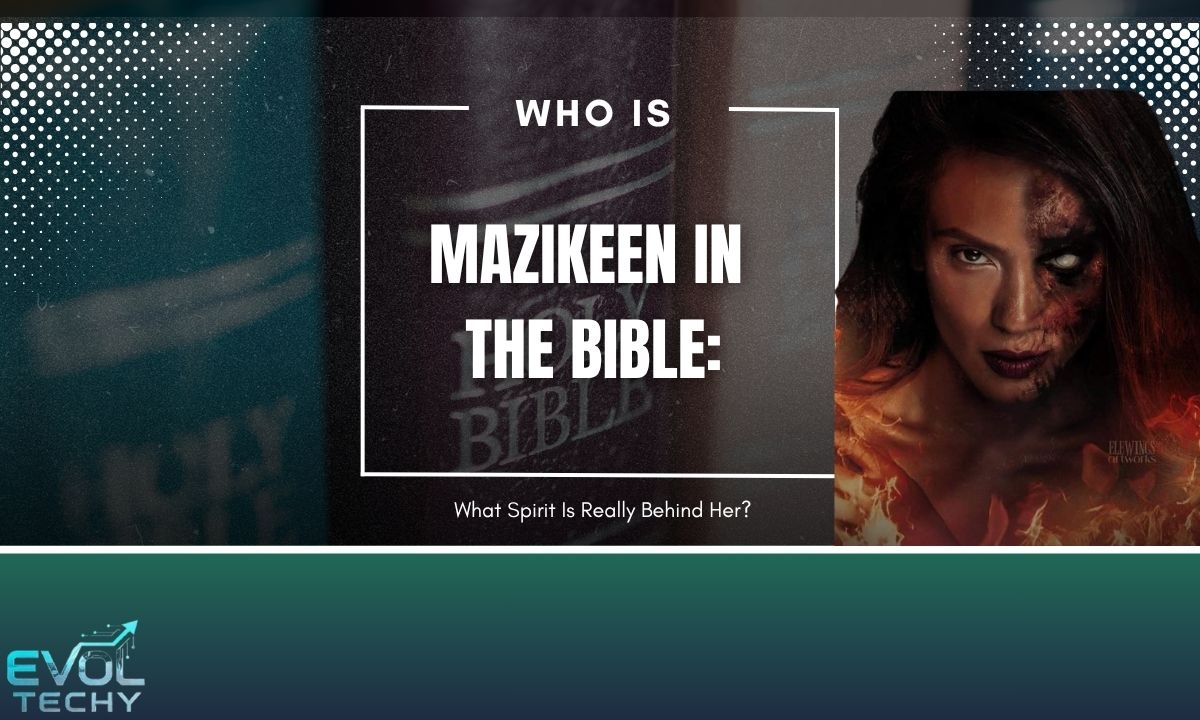
Who Is Mazikeen in the Bible: What Spirit Is Really Behind Her?
If you have spent any time watching Lucifer on Netflix or flipping through Neil Gaiman’s Sandman comics, you have probably typed this exact question into a search bar late at night. Mazikeen, the sharp tongued, half scarred demon known simply as Maze, feels like she should belong somewhere in scripture. Her name sounds ancient. Her attitude feels mythic. Her loyalty to Lucifer Morningstar seems almost biblical in its intensity.
So here is the honest answer right away. Mazikeen does not appear in the Bible. Not in the Old Testament, not in the New Testament, not in any recognized translation or canon. She is a modern fictional creation. But that does not mean her name was pulled out of thin air. Her roots stretch back into real Jewish folklore, Talmudic literature, and centuries old beliefs about harmful spirits that once explained sickness, misfortune, and the unseen dangers of daily life.
This article walks through everything connected to her name, from ancient Hebrew word origins to her modern portrayal on screen, so you understand exactly where fact ends and fiction begins.
Is Mazikeen a Real Demon?
No, Mazikeen is not a real demon in the sense of being a documented biblical or theological entity. She is a character first introduced by Neil Gaiman in The Sandman comic series in 1989, later adapted for the Lucifer television series where actress Lesley Ann Brandt brought her to life.
That said, the word her name is built on is very real. Jewish folklore has long spoken of a category of spirits believed to cause harm, mischief, and misfortune in the physical world. Gaiman borrowed this concept when naming his character, giving her instant mythological weight without inventing an entirely new mythology from scratch.
It helps to separate three different things that often get blended together online:
- The historical folklore concept of harmful spirits
- The Hebrew word the concept is named after
- The fictional character built on top of that word
Understanding this separation is the key to answering almost every question people ask about her.
A lot of the confusion comes from how convincingly the show and comics weave real theological threads into a fictional narrative. Lucifer Morningstar, Amenadiel, Michael, and other characters in the Lucifer series do have direct roots in the Bible and Christian tradition, even if the show reinterprets them heavily. Mazikeen, sitting alongside these more recognizable figures, borrows enough credibility from them that many viewers naturally assume she must share the same scriptural foundation. She does not, but the illusion is understandable given how carefully the writers built her world around genuine religious and folkloric source material.
Mazikeen is far from the only fictional demon built this way. Writers of fantasy and horror frequently mine older folklore and obscure Hebrew or Aramaic terms to give original creations a sense of authenticity. Mazikeen simply happens to be one of the more successful examples of this technique.
What the Talmud Says About Mazikin
The Talmud, which serves as the central text of Rabbinic Judaism, contains several references to spirits called Mazzikin. These beings were considered part of a wider category of unseen entities that could interfere with human life, sometimes described alongside shedim, another Hebrew term often translated as demons or false gods.
According to Talmudic discussion, Mazzikin were thought to be invisible most of the time, moving through the world without being seen by ordinary people. Ancient rabbis debated their nature at length. Some passages describe them as numerous beyond counting, surrounding people constantly but hidden from human perception. Others link certain illnesses, sudden accidents, or unexplained fears to their influence.
A few key points from Talmudic tradition are worth noting:
- Mazzikin were not always considered purely evil in the same way later Christian demonology frames demons.
- They were sometimes associated with specific locations, such as ruins, cemeteries, or lonely roads at night.
- Certain rabbinic teachings suggested protective prayers or rituals could ward off their influence.
- They were part of a broader unseen ecosystem of spirits rather than a single organized force of darkness.
This is very different from the modern pop culture version of a demon as a horned, purely malevolent figure. In folklore, Mazzikin occupy a gray zone, closer to trickster spirits or nature spirits than to the fire and brimstone imagery most people picture.
Talmudic scholars often discussed practical ways to reduce the risk of encountering them. Certain passages recommend caution around isolated places after dark, avoiding stagnant water at night, and being mindful during transitional times of day such as dusk. These were not framed as absolute laws so much as folk wisdom passed down through generations, blending genuine spiritual belief with practical safety advice for a world without street lighting or modern medicine.
Belief in Mazzikin did not exist in isolation. Jewish tradition described an entire hierarchy of unseen beings, including shedim, ruchot, and se’irim, each with slightly different roles and reputations. Mazzikin were generally considered among the more mischievous and unpredictable of these categories, more prone to causing accidents or bad luck than orchestrating grand cosmic evil.
Mazikeen Mythology
Origins in Jewish Folklore
The word Mazikeen traces back to the Hebrew root mazik, which means one who damages or one who harms. The plural form, mazikin, describes an entire class of these harmful spirits within Jewish mystical and folkloric tradition.
These spirits were not confined to obscure texts either. They appear across centuries of Jewish oral tradition, mystical writing, and folk belief, often used to explain everyday misfortunes before modern science offered other explanations. A sudden illness, a fall, a strange noise in the dark, all of it could be attributed to the unseen work of a mazik.
The Folklore Story
Traditional stories describe mazikin as spirits that exist in the spaces between the visible and invisible world. According to folklore, they were believed to be so numerous that if human eyes could perceive them, the sheer number surrounding every person would be overwhelming.
Some versions of the folklore tie these spirits to Lilith, the figure described in Jewish and Mesopotamian mythology as Adam’s first wife. According to legend, when Lilith refused to submit to Adam and left the Garden of Eden, she became a night spirit associated with darkness, wilderness, and the raising of demonic offspring. This connection between mazikin and Lilith is exactly the thread that Neil Gaiman later pulled on when building his fictional Mazikeen and tying her to the Lilim, the mythical children of Lilith.
Folk storytellers also described mazikin as beings who could take on partial or distorted forms, sometimes appearing human from certain angles while betraying their true nature from others. Some tales describe them casting no shadow, others describe them with backward feet or an inability to be seen fully in mirrors and still water. These small physical inconsistencies were meant to help people recognize a mazik if one crossed their path disguised as an ordinary traveler.
Beyond individual encounters, mazikin were sometimes blamed collectively for household misfortunes, from spoiled food to broken tools to unexplained noises at night. This everyday, almost domestic quality of the folklore is very different from the grand, apocalyptic demons often depicted in later Christian art and literature.
Understanding the Origin of the Name Mazikeen
Breaking the name down linguistically helps clarify a lot of confusion.
| Term | Language | Meaning |
|---|---|---|
| Mazik | Hebrew | One who damages or harms |
| Mazikin | Hebrew (plural) | Class of harmful spirits in folklore |
| Mazikeen | Modern adapted spelling | Fictional character name used in comics and television |
The name was not invented from nothing. It is an English adaptation of a real Hebrew plural noun, restyled slightly to work as a proper name for a single character rather than a category of spirits. This is a common technique in fantasy and speculative fiction, taking a real word rooted in folklore or mythology and reshaping it into something that feels both authentic and original.
This is also why so many people searching for her assume she must appear somewhere in scripture. The name genuinely sounds biblical because it is built from real biblical era Hebrew vocabulary, even though the character herself is a twentieth century invention.
Cultural and Spiritual Significance of the Name Mazikeen
Names carried enormous weight in Jewish mystical tradition. Knowing the true name of a spiritual being was often believed to grant some form of understanding or even authority over it. This belief system is part of why the choice of the word mazikin feels so deliberate rather than random.
For modern audiences, the name still carries symbolic power even outside religious context. It signals:
- A connection to something ancient and mysterious
- A being that exists in moral gray areas rather than clear good or evil
- A link to feminine spiritual power through the association with Lilith
- A sense of danger balanced with complexity rather than one dimensional villainy
This is part of why the name has resonated so strongly with audiences. It does not sound like a generic invented fantasy name. It carries the weight of real folklore behind it, even for viewers who have never studied Talmudic literature.
Modern audiences, particularly younger viewers raised on prestige television and complex antiheroes, tend to gravitate toward supernatural characters who resist easy moral labeling. A demon who is simply evil feels dated compared to a demon who struggles with loyalty, autonomy, and identity. Mazikeen’s name, rooted in a tradition that already viewed spirits as morally ambiguous, gave writers a head start in crafting exactly that kind of layered character.
Who Is Mazikeen in Sandman?
Mazikeen first appeared in Neil Gaiman’s The Sandman comic series, published by DC Comics beginning in 1989. In this original comic book universe, she exists within Gaiman’s richly built mythology surrounding Dream, Lucifer Morningstar, and the various realms of the afterlife.
In the comics, Mazikeen is closely tied to Lucifer and hell itself, described as being part demon and part something else, with a face that is split between beauty and horrific scarring. This visual detail, half of her face appearing normal while the other half is disfigured, becomes a defining and recurring element of her character across every adaptation that follows.
Gaiman’s version laid the groundwork for everything that came later, including her eventual leap to television. The core traits established in the comics, her loyalty, her fierce independence, and her unsettling appearance, all carried forward into the Lucifer series with relatively little change.
In The Sandman, Mazikeen’s world is far darker and more mythologically dense than the crime procedural tone the television series eventually adopted. Gaiman’s hell is populated with an enormous cast of demons, fallen angels, and forgotten gods, and Mazikeen exists as one distinctive figure within that much larger tapestry rather than a central protagonist. Her comic book appearances are relatively brief compared to her later television screen time, but they were enough to establish her as a memorable, quotable character with a clear visual identity.
When the character crossed over into the Lucifer comic book spinoff and later the television adaptation, writers expanded her role considerably, giving her a fuller backstory, a human alias, and far more screen time. This expansion is why most people today associate her with the television series rather than her original comic book debut.
What Kind of Demon Is Mazikeen in the Bible?
Since Mazikeen herself is absent from scripture, the more useful question becomes what type of biblical demon she most closely resembles in spirit and archetype. The Bible does describe multiple categories of demonic or fallen beings, and Mazikeen borrows traits from several of them without matching any single one exactly.
Closest Biblical Parallels
A few biblical figures and concepts offer the closest thematic comparison:
- Shedim – Mentioned in Deuteronomy 32:17, usually translated as demons or false gods associated with pagan worship.
- The Nephilim – Described in Genesis 6:4 as offspring of fallen beings and humans, representing a hybrid nature similar to how Mazikeen is portrayed as part demon.
- Legion – Referenced in Mark 5:9, describing multiple demonic spirits inhabiting a single person, showing the biblical concept of numerous unseen harmful spirits.
- Fallen angels – Described in Revelation 12:4 as a portion of heaven’s angels cast down, echoing themes of rebellion and banishment that parallel Lucifer’s own story.
- Lilith – Referenced once in Isaiah 34:14, with interpretations varying widely across scholarly and folkloric traditions.
None of these figures match Mazikeen exactly. Instead, her fictional character blends fragments of each one, combining hybrid origins, association with the underworld, and loyalty to a fallen figure into a single cohesive character. This is a hallmark of good speculative fiction writing, weaving multiple mythological threads together rather than lifting one figure wholesale.
The table below breaks down how each of these biblical concepts maps onto specific traits found in Mazikeen’s fictional portrayal, making the comparison easier to visualize.
| Biblical Concept | Scripture Reference | Trait Mirrored in Mazikeen |
|---|---|---|
| Shedim | Deuteronomy 32:17 | General classification as a harmful spirit or demon |
| Nephilim | Genesis 6:4 | Hybrid nature between two different kinds of beings |
| Legion | Mark 5:9 | Existence within a vast, largely unseen population of spirits |
| Fallen angels | Revelation 12:4 | Banishment and loyalty tied to a fallen leader figure |
| Lilith | Isaiah 34:14 | Maternal lineage and association with the night |
Reading through this comparison, it becomes clear that Mazikeen was never meant to represent a single biblical demon accurately. She is closer to a mosaic, assembled from small pieces of several traditions and reshaped into something new for a modern audience raised on television rather than scripture.
Mazikeen of Lilith
Within both the comics and the television series, Mazikeen is explicitly identified as one of the Lilim, a class of demons said to be descended directly from Lilith. This lineage places her within a mythological family tree that predates the character herself by centuries, since Lilith’s legend as Adam’s first wife appears in Jewish apocryphal texts such as the Alphabet of Ben Sirach.
According to that older legend, Lilith left Eden rather than submit to Adam, transforming into a night demon who bore countless supernatural children over the following centuries. Fiction writers have leaned heavily on this idea, treating the Lilim as a fierce, matriarchal demon bloodline distinct from other classes of hellish beings.
This lineage gives Mazikeen several defining traits within her fictional universe:
- A hybrid, semi human, semi demonic nature
- A connection to feminine power and independence rather than pure evil
- A place within hell’s hierarchy that is separate from Lucifer’s own fallen angel origins
- A cultural symbol tied to dark goddess archetypes found throughout mythology
This distinction matters within the fictional hierarchy of hell. Lucifer and his fellow fallen angels descend from a rebellion in heaven, while the Lilim descend from an entirely separate maternal bloodline rooted in earthly folklore. Mazikeen’s loyalty to Lucifer is therefore presented as a choice rather than an obligation tied to shared ancestry, which adds weight to her devotion.
Who Is the Father of Mazikeen?
This is one of the more debated questions among fans, and the honest answer is that it remains intentionally ambiguous across most adaptations. While her mother’s lineage through Lilith is firmly established, the identity of her father is rarely, if ever, directly confirmed in canon material.
This ambiguity is not necessarily a writing oversight. Leaving her paternal origin open ended keeps the focus on her connection to Lilith and the Lilim, reinforcing the theme that her identity is shaped primarily through a maternal, matriarchal demon lineage rather than a paternal one. It also mirrors real world folklore, where mazikin were rarely given detailed individual family trees to begin with, existing instead as a broad category of spirits rather than distinct named beings with personal histories.
Fan communities have proposed various theories over the years, none confirmed by Gaiman or the Lucifer show runners as official canon. For a character built around themes of self definition rather than inherited identity, this lack of a confirmed father figure arguably fits her arc better than a clear answer ever could.
Her Relationship with Lucifer
One of the most defining aspects of Mazikeen’s character, especially in the Lucifer television series, is her long standing bond with Lucifer Morningstar himself.
Loyal Demon
Mazikeen follows Lucifer from hell to Earth and remains his closest confidant for centuries within the show’s timeline. She serves as his personal bounty hunter and enforcer, showing a level of devotion that goes far beyond simple obedience. This loyalty becomes one of the emotional anchors of the entire series, and it is repeatedly tested as Lucifer’s priorities shift toward his growing relationship with the human detective he works alongside.
Strong and Independent Woman
Despite her devotion to Lucifer, Mazikeen is never portrayed as submissive or one dimensional. She consistently pursues her own goals, forms her own relationships, and eventually pushes back against being defined solely through her connection to him. This evolution across the series turns her into one of the more compelling character arcs in the show, culminating in storylines where she actively questions what she wants for herself outside of serving anyone else’s agenda, including Lucifer’s.
Complexities of Existence
Mazikeen’s story explores questions of identity, belonging, and what it means to exist between worlds, neither fully human nor fully accepted among demons. This tension gives her narrative depth that goes well beyond the typical portrayal of demons in either scripture or traditional horror fiction. Later seasons lean directly into this struggle, giving her storylines centered on whether she can ever earn a soul of her own, a question that turns her into one of the show’s most emotionally resonant characters rather than a simple sidekick to Lucifer’s central story.
Mazikeen Demon Face
Mazikeen’s appearance is one of her most visually memorable traits. Across both the comics and the television adaptation, her face carries a striking asymmetry, one side appearing conventionally attractive while the other bears deep, maze like scarring.
What Happened to Mazikeen’s Face?
In the Lucifer television series, her scarred face is tied directly to her demonic nature and her time spent in hell. The scarring is often interpreted symbolically, representing the maze like complexity of her inner identity, torn between the demon she was created to be and the more layered individual she becomes throughout the story.
This visual choice also reinforces her name. A maze suggests confusion, complexity, and hidden pathways, all fitting themes for a character whose entire existence blurs the line between monster and something far more human.
The show occasionally allows Mazikeen to shift her appearance, hiding the scarring to blend in among humans, only for it to reappear during moments of heightened emotion. This mechanic reinforces the idea that her scarred face is not simply a cosmetic detail but a visual representation of authenticity, turning a simple scar into ongoing narrative shorthand.
The Bigger Picture: Mazikeen’s Cultural Impact
Mazikeen has grown far beyond her original comic book appearance. She now shows up across novels, tabletop role playing games, video games, and other comic book titles, each version borrowing from the same core mythology while adding new layers.
Why She Resonates
Audiences connect with Mazikeen because she refuses to fit neatly into a single category. She is not a pure villain, and she is not a traditional hero either. This ambiguity feels more honest and relatable than the flat, purely evil demon archetype found in older horror storytelling.
Themes She Embodies
Several recurring themes explain her lasting popularity:
- Loyalty and its limits – Her devotion to Lucifer is tested repeatedly, showing that loyalty can coexist with personal growth.
- Identity beyond origin – Despite being created as a demon, she consistently defines herself through her own choices.
- Feminine strength through Lilith – Her lineage ties her to one of mythology’s most enduring symbols of female independence and defiance.
- Complexity over simplicity – Her scarred face and morally gray choices reflect a broader shift in modern fiction away from one dimensional demons.
These themes explain why a character with no actual biblical basis has still sparked so much genuine theological curiosity and online discussion.
Her influence has also extended into gaming and tabletop culture, where Lilim style demons inspired partly by her characterization show up in various fantasy settings. Fan art communities and online forums dedicated to the Lucifer series continue to celebrate her design and story arcs years after the show concluded, a sustained footprint that is relatively rare for a supporting character.
You can also checkout this article as well Archangels Meaning in the Bible: A Gentle Guide to God’s Heavenly Messengers
Conclusion
Mazikeen is not a biblical figure, and no version of scripture ever mentions her by name or story. Her origin instead traces back to real Hebrew folklore surrounding harmful spirits known as mazikin, later reshaped by Neil Gaiman into an entirely new fictional character.
What makes her compelling is exactly that blend of ancient word roots and modern storytelling. She borrows enough from Jewish tradition and biblical themes to feel authentic, while remaining a distinctly contemporary character built for comics, television, and the wider world of speculative fiction.

Hey, I am John Gabriel, and I am passionate about exploring Bible meanings, biblical names, scriptures, symbols, and spiritual insights. I create well-researched, easy-to-understand content that helps readers discover the deeper messages of God’s Word with clarity, faith, and biblical understanding.