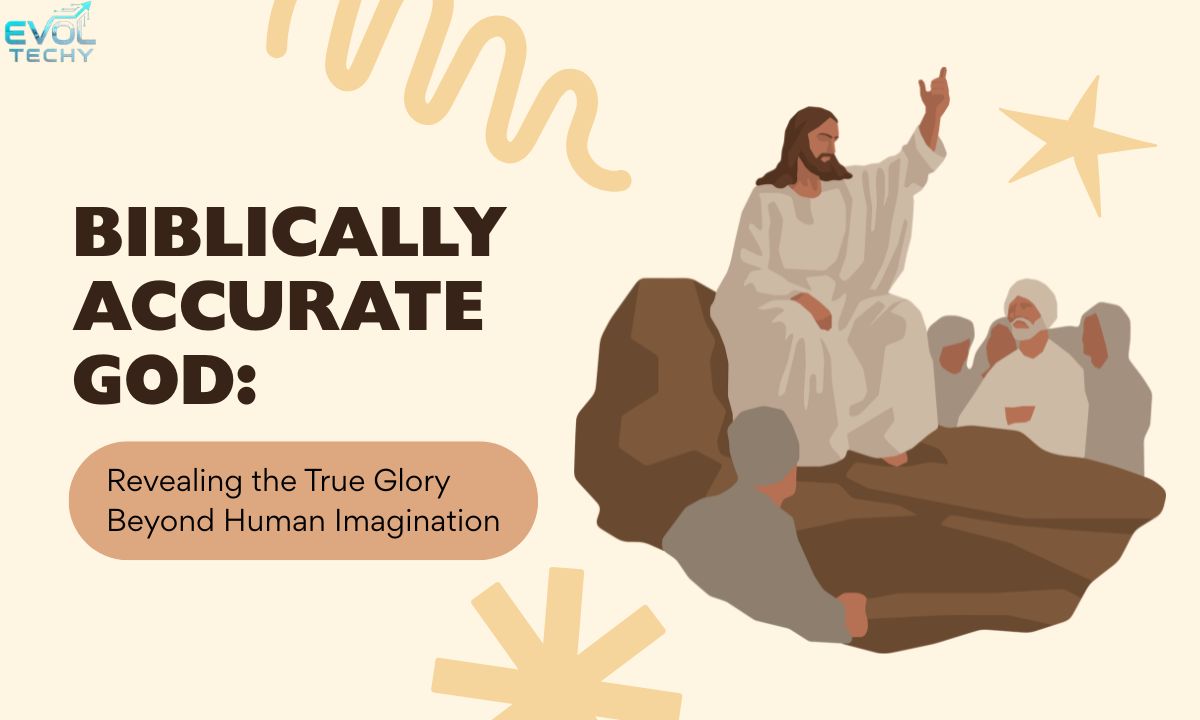
Biblically Accurate God: Revealing the True Glory Beyond Human Imagination
Most people carry a picture of God in their minds that was never actually drawn by Scripture. It came from a painting, a movie scene, a childhood Sunday school flannel board, or a vague cultural feeling about an old man in the clouds. The biblically accurate God looks nothing like these borrowed images. He is not a grandfatherly figure floating on a cloud, nor a distant cosmic force with no personality. He is the living God described across sixty six books, thousands of years, and dozens of authors, all pointing toward one consistent, awe inspiring identity.
This article walks through what Scripture itself says about God’s nature, His attributes, His appearances, and His ultimate self revelation in Jesus Christ. The goal is simple: to help you know God as He actually is, not as culture has reshaped Him to be.
Along the way, we will look at how the prophets described their encounters with divine glory, how the New Testament completes what the Old Testament only began to show, and how a correct understanding of God’s character actually changes the way a person prays, worships, and makes decisions. This is not a purely academic exercise. Theology, when done well, always lands somewhere practical. It reshapes how we see ourselves, how we treat others, and how we face difficulty. A biblically accurate view of God is the foundation for a stable, resilient, and genuinely joyful faith.
The Concept of a Biblically Accurate God
The phrase “biblically accurate” simply means grounded in the text of Scripture rather than in tradition, art, or personal preference. When applied to God, it asks a direct question: what does the Bible actually say about who God is, not what we assume or have inherited from popular culture?
This matters because every generation tends to remake God in its own image. Some picture Him as a strict judge waiting to punish. Others picture Him as an indulgent grandfather who overlooks sin. Scripture presents something far richer than either extreme. It reveals a God who is simultaneously holy and loving, powerful and personal, transcendent and near. Understanding the biblically accurate God requires setting aside assumptions and returning to the primary source, letting the text define the subject rather than the other way around.
This process of returning to the text is sometimes called exegesis, drawing meaning out of Scripture rather than reading personal opinion into it. It stands in contrast to eisegesis, the common but flawed practice of approaching the Bible with a conclusion already decided and then searching for verses that appear to support it. A biblically accurate understanding of God requires the discipline of exegesis applied consistently, book by book, across the entire canon of Scripture. It also requires patience, since some questions about God’s nature are addressed clearly in one passage while other questions require comparing many passages together to see the full picture. The reward for this patient study is a portrait of God that is stable, coherent, and able to withstand honest scrutiny, rather than a fragile image built on a handful of favorite verses taken out of context.
Core Divine Attributes Revealed in Scripture
Scripture does not organize God’s attributes into a neat checklist, but as the narrative unfolds from Genesis to Revelation, clear and repeated patterns emerge. These patterns form the foundation for any accurate understanding of who God is.
Essential Divine Attributes
The following table summarizes the primary attributes of God as consistently presented throughout the biblical text.
| Attribute | Meaning | Example Reference |
|---|---|---|
| Omnipotence | Unlimited power over all creation | Jeremiah 32:17 |
| Omniscience | Complete and perfect knowledge | Psalm 147:5 |
| Omnipresence | Present everywhere at once | Psalm 139:7 to 10 |
| Holiness | Moral purity and separateness from sin | Isaiah 6:3 |
| Immutability | Unchanging character over time | Malachi 3:6 |
| Eternality | Existing without beginning or end | Psalm 90:2 |
| Love | Self giving devotion toward creation | 1 John 4:8 |
| Justice | Perfect fairness in judgment | Deuteronomy 32:4 |
These attributes do not compete with one another. They exist together in perfect balance, which is part of what makes the God of the Bible so different from the fragmented gods of ancient mythology or the vague spiritual forces described in many modern belief systems. Ancient near eastern deities were typically portrayed as limited, territorial, and morally inconsistent, capable of jealousy, deception, and defeat. The God of Scripture stands apart precisely because His attributes never contradict one another and never diminish over time. His power never fades, His knowledge never grows outdated, and His holiness never compromises for convenience.
It is also worth noting that these attributes are not separate parts bolted together to form God’s identity. Theologians describe God’s nature as simple, meaning He is not composed of divisible pieces the way a machine is built from separate components. His love is holy love. His power is just power. His knowledge is loving knowledge. Every attribute is fully present in every action God takes, which is why Scripture can describe the same event, such as the exodus from Egypt, as an act of judgment against Pharaoh and an act of covenant love toward Israel at the very same time.
God’s Various Forms and Manifestations
Because God is spirit and has no physical body in His essential nature, He has chosen throughout history to reveal Himself through visible and perceivable forms. These moments are known as theophanies, temporary appearances that allow finite humans to encounter the infinite God without being destroyed by His full glory.
Common biblical manifestations include:
- A burning bush that was not consumed, seen by Moses in Exodus 3
- A pillar of cloud by day and fire by night, guiding Israel through the wilderness
- Smoke and thunder covering Mount Sinai during the giving of the law
- The Angel of the Lord, appearing at key moments to the patriarchs
- Visions of a throne room filled with overwhelming light, seen by Isaiah and Ezekiel
Key Distinctions in Divine Manifestation
It helps to distinguish between three related but different concepts when studying how God reveals Himself.
| Concept | Definition |
|---|---|
| Theophany | A temporary, visible appearance of God in the Old Testament |
| Incarnation | God permanently taking on human flesh in the person of Jesus Christ |
| Christophany | A pre incarnate appearance of the Son before His birth in Bethlehem |
Recognizing these distinctions prevents confusion when reading Old Testament passages that describe encounters with God in human or angelic form. For example, when Abraham hosted three visitors near the oaks of Mamre, one of them is later identified in the text as the Lord Himself, speaking and acting in ways only God could act, while the other two are described elsewhere as angels sent to Sodom. Many scholars view this Angel of the Lord figure, who appears repeatedly throughout the Old Testament speaking with divine authority yet remaining distinct from God the Father, as a pre incarnate appearance of the Son, a Christophany preparing the way for the full incarnation that would later occur in Bethlehem.
Understanding this distinction also helps explain why God can be described in Scripture as invisible and unseeable in His full essence, while also being described as appearing, speaking, and even eating with people at certain moments. The invisible, infinite essence of God and the visible, limited manifestations He chooses to display are not contradictory. They simply describe two different aspects of how an infinite being interacts with a finite creation.
Biblical Descriptions of God’s Appearance
When Scripture does describe what God looks like, the language is symbolic and overwhelming rather than a literal photograph. The purpose is always to communicate His character, not to give readers a physical description they could sketch.
Prophetic Visions of Divine Glory
The prophets Isaiah, Ezekiel, and John each received visions of God’s throne room, and their descriptions share striking similarities. Isaiah saw the Lord seated on a high and exalted throne, surrounded by seraphim calling out His holiness. Ezekiel described a figure above a sapphire throne, glowing like metal and fire, surrounded by brilliant light. John, in the book of Revelation, saw someone seated on a throne with an appearance like precious stones, encircled by a rainbow.
These visions consistently emphasize brightness, fire, precious stones, and overwhelming scale. None of them attempt to describe facial features or a normal human body. The point is majesty, not anatomy.
The human reaction recorded in each of these visions is also worth noting. Isaiah responded by declaring himself ruined in the presence of such holiness. Ezekiel fell face down before the glowing figure on the throne. John, though he had walked closely with Jesus during His earthly ministry, fell as though dead when he saw the risen and glorified Christ in Revelation. This consistent pattern of overwhelming fear followed by comfort and commissioning shows that genuine encounters with God’s glory are never casual experiences. They confront human smallness and sinfulness before offering grace and purpose. This pattern also explains why Scripture repeatedly warns that no one can see God’s unveiled face and live, a statement given to Moses that underscores just how far beyond ordinary human capacity God’s true glory extends.
Progressive Revelation of God’s Character
God did not reveal everything about Himself at once. Instead, Scripture presents a gradual unfolding of divine self disclosure that builds across centuries, culminating in the person of Jesus Christ.
Stages of Divine Self-Disclosure
- Creation, where God’s power and order are displayed through the natural world
- The patriarchal era, where God speaks directly to individuals like Abraham and Jacob
- The Exodus and the law, where God reveals His holiness and covenant faithfulness
- The prophets, where God’s justice, mercy, and future plans are declared
- The incarnation of Christ, where God’s full character is displayed in human form
This progressive pattern does not mean God changed. It means human understanding deepened as more of His self revelation was given.
A helpful analogy is the way a child comes to understand a parent. A toddler knows a parent primarily through basic care, feeding, comfort, and protection. A teenager begins to understand that same parent’s values, reasoning, and long term goals. An adult child eventually appreciates the parent’s full character, including sacrifices made long before the child was old enough to notice them. The parent has not changed across these stages. The child’s capacity to understand the parent has simply matured. In the same way, humanity’s understanding of God matured across biblical history, moving from basic awareness of His power and provision toward a full appreciation of His holiness, justice, love, and redemptive plan, all fully realized in Christ.
Experiencing the Presence of God in Everyday Life
Knowing about God’s attributes intellectually is only the starting point. Scripture consistently invites believers to experience His presence personally, not merely study Him academically. This happens through prayer, worship, obedience, and quiet attentiveness to how God works in ordinary circumstances.
Many believers describe sensing God’s nearness during difficult seasons, moments of worship, or quiet reflection on Scripture. While these experiences are subjective, they align with a consistent biblical promise that God draws near to those who seek Him. Practical ways to cultivate this awareness include setting aside time for unhurried prayer, journaling reflections on daily events, and paying attention to answered prayer as evidence of God’s active involvement in life.
It is worth being cautious here as well. Emotional experiences alone are not a reliable measuring stick for God’s presence, since feelings fluctuate based on circumstances, health, and personality. Scripture ties the promise of God’s presence to His character and His promises, not to a particular emotional sensation. A believer who does not feel any dramatic emotion during prayer is not necessarily distant from God. The consistent biblical pattern is that God’s presence is a settled reality grounded in His promises, something to be trusted by faith even during seasons that feel spiritually dry.
Some practical rhythms that help cultivate ongoing awareness of God’s presence include the following.
- Beginning each day with even a few minutes of quiet reading and reflection
- Practicing gratitude by naming specific evidences of God’s involvement in daily circumstances
- Returning attention to God’s character throughout the day rather than only during set prayer times
- Engaging in corporate worship regularly rather than relying solely on private devotion
- Resting in God’s promises during difficult seasons rather than waiting for a particular feeling to arrive
Jesus Christ: The Complete Revelation of God
If someone wants to know what God is truly like, Scripture points them directly to Jesus Christ. He is not merely a messenger sent from God or a prophet speaking on His behalf. He is God’s own nature expressed in a way humanity could see, hear, and touch.
Christ as the Perfect Image of God
Paul describes Christ as the image of the invisible God, the one through whom all things were created and in whom all things hold together. This means Jesus is not a symbol or representative standing at a distance from God’s essence. He is that essence made visible.
This claim was radical within its original first century context. Jewish monotheism strictly rejected any suggestion that a created being could share in God’s identity, and yet the earliest Christian writers, themselves devout monotheistic Jews, applied language previously reserved for God alone directly to Jesus. He was described as worthy of worship, as the one through whom the universe was created, and as sustaining all things by his own powerful word. These are not small claims made casually. They represent a considered theological conviction that in Jesus, the invisible God had become visible without ceasing to be fully God.
Jesus as God’s Exact Representation
The book of Hebrews describes the Son as the radiance of God’s glory and the exact representation of His being. The Greek term behind this phrase was used historically to describe the impression left by a stamp or seal, an exact and precise copy rather than a rough approximation. This is a striking claim: to look at Jesus is to look at an accurate representation of God’s own character.
Jesus made this connection explicit during His own ministry. When one of His disciples asked to be shown the Father, Jesus responded by explaining that anyone who had seen Him had already seen the Father. This was not a claim to mere similarity, the way a son might resemble a father in personality or mannerisms. It was a claim to genuine identity, that the very character and nature of God the Father was fully present and observable in the person of Jesus Christ, walking among ordinary people in first century Judea.
Divine Attributes Displayed Through Jesus
Every attribute previously discussed, power, knowledge, holiness, love, and justice, finds concrete expression in the recorded life of Jesus.
Christ’s Demonstration of Divine Attributes
| Divine Attribute | How Jesus Displayed It |
|---|---|
| Power | Calming storms, healing the sick, raising the dead |
| Knowledge | Perceiving people’s thoughts and hidden motives |
| Holiness | Living a sinless life under constant scrutiny |
| Love | Sacrificing Himself willingly for those who opposed Him |
| Justice | Confronting hypocrisy and defending the vulnerable |
Jesus as the Key to Understanding Scripture
Jesus Himself taught that the entire Old Testament pointed toward His arrival and mission. Understanding Him correctly becomes the lens through which every other part of Scripture makes sense.
Christ as the Interpretive Lens
On the road to Emmaus, Jesus explained to two discouraged travelers how the writings of Moses and the prophets all spoke of Him. This approach to reading Scripture, starting with Christ and working outward, prevents fragmented or contradictory interpretations of God’s character across the two Testaments.
This interpretive approach is sometimes called Christocentric reading. Rather than treating the Old Testament as an unrelated set of ancient laws and stories, it recognizes patterns, promises, and pictures that anticipate the arrival of Christ. The sacrificial system points toward a final sacrifice sufficient to remove sin permanently. The priesthood points toward a permanent mediator between God and humanity. The kingship of David points toward an eternal king whose reign will never end. Reading Scripture this way does not force artificial meaning onto the text. It follows the same interpretive path the New Testament authors themselves consistently used when explaining how the story of Israel culminates in the story of Jesus.
God’s Redemptive Work Through Christ
The entire narrative arc of Scripture moves toward one central rescue mission: restoring what sin broke between God and humanity. Every covenant, sacrifice, and prophecy in the Old Testament anticipates this redemptive climax.
Christ’s Redemptive Accomplishments
- Satisfying the demands of divine justice through His death
- Defeating the power of sin and death through His resurrection
- Reconciling humanity to God through faith rather than works
- Securing eternal life for all who trust in Him
- Establishing a new covenant relationship between God and His people
Essential Characteristics of the Biblically Accurate God
Beyond the foundational attributes already outlined, three characteristic pairs stand out as central to Scripture’s overall portrait of God.
Divine Omnipotence and Omniscience
God’s power is not limited by physical laws, human resistance, or circumstance. His knowledge is not limited by time, distance, or hidden information. Together these two attributes mean nothing is beyond His ability and nothing escapes His awareness.
How God’s Power and Knowledge Work Together
Power without knowledge could be reckless. Knowledge without power could be helpless. In God, the two are perfectly united, meaning His actions are always informed by complete understanding, and His understanding is always backed by sufficient ability to act.
This union offers real comfort in seasons of confusion or hardship. A believer facing an unexplainable trial can trust that God is not reacting to information He just learned or scrambling to respond to circumstances beyond His control. He already knew the trial was coming, already understands its full context, and already possesses the power to bring good out of it in His own timing. This does not eliminate the difficulty of suffering, but it does provide a stable foundation for trust that a limited or reactive deity could never offer.
Perfect Holiness and Righteous Justice
Holiness describes God’s complete moral purity and separateness from sin. Justice describes His commitment to treating every situation with perfect fairness. These attributes explain why sin cannot simply be ignored and why judgment appears throughout Scripture alongside mercy.
The Relationship Between Holiness and Justice
Because God is holy, sin cannot exist in His presence unaddressed. Because God is just, He cannot arbitrarily excuse wrongdoing without consequence. This tension is resolved at the cross, where holiness and justice are satisfied simultaneously through Christ’s sacrifice.
Some assume that holiness and justice make God harsh or unapproachable, but Scripture frames them as protective rather than punitive at their core. A just God is one whose promises can be trusted completely, since He cannot be bribed, deceived, or persuaded to act unfairly. A holy God is one whose character sets an unwavering standard, giving humanity something stable to measure truth and goodness against rather than a shifting, culturally dependent standard. Far from making God distant, these attributes make Him dependable.
Boundless Love and Abundant Mercy
Alongside His holiness and justice, Scripture repeatedly emphasizes that God’s defining posture toward humanity is love. This is not a shallow sentiment but a deliberate, sacrificial commitment expressed most clearly through the gift of His Son.
Divine Love and Mercy in Action
- Sending Christ to die for people while they were still in rebellion against Him
- Offering forgiveness freely to anyone who turns to Him in repentance
- Extending patience toward humanity despite repeated failure
- Restoring broken relationships through grace rather than earned merit
This kind of love is described in Scripture using a specific term, often translated as unfailing love or steadfast love, which appears repeatedly throughout the Psalms and prophetic books. Unlike sentimental affection that depends on the worthiness of its recipient, this love is described as covenantal, meaning it is grounded in God’s own faithful character rather than in anything the recipient has done to deserve it. This distinction matters greatly for anyone who has struggled to believe they could ever be worthy of God’s affection. Biblical love was never based on human worthiness in the first place. It flows from who God is, not from who we are.
The Eternal Nature of God: Unchanging Across Time and Creation
God exists outside the boundaries of time itself. He had no beginning and will have no end, and His character does not shift with cultural trends or historical eras. Malachi records God declaring that He does not change, and this unchanging nature is what makes His promises trustworthy across generations. A God who could change His mind about His own character would offer no stable foundation for faith. The God of Abraham, the God of the prophets, and the God revealed in Christ are the same God, consistent from eternity past into eternity future.
The Triune Nature of God: Father, Son, and Spirit
One of the most distinctive claims of biblical theology is that God exists eternally as three persons sharing one divine essence, Father, Son, and Holy Spirit. This is not tritheism, three separate gods, nor modalism, one God wearing three different masks. It is a unique relationship within the single being of God.
Biblical Foundation for the Trinity
While the word Trinity never appears in Scripture, the concept is woven throughout its pages, from the plural language used in Genesis creation accounts to the explicit baptismal formula Jesus gave His disciples.
Scriptural Evidence for Trinitarian Doctrine
- The baptism of Jesus, where the Father speaks, the Son is baptized, and the Spirit descends
- The Great Commission, where believers are baptized in the name of the Father, Son, and Holy Spirit
- Paul’s benediction invoking the grace of Christ, the love of God, and the fellowship of the Spirit
- John’s Gospel identifying the Word, who is both with God and is God, as becoming flesh in Jesus
God the Father’s Role
The Father is consistently presented as the source and initiator within the Godhead, the one who sends the Son and the Spirit into the world for humanity’s redemption.
The Father’s Work in Redemption
The Father planned salvation before creation, sent the Son at the appointed time, and adopts believers into His family through faith in Christ.
God the Son’s Work
The Son is the one through whom creation came into being, who took on human flesh, lived a perfect life, died sacrificially, and rose bodily from the grave.
Christ’s Divine and Mediatorial Functions
Jesus serves as the mediator between God and humanity, the great high priest who intercedes on behalf of believers, and the coming judge who will one day return to establish His kingdom fully.
God the Holy Spirit’s Ministry
The Spirit is the active presence of God within believers today, convicting the world of sin, guiding Christians into truth, and producing spiritual transformation from the inside out.
The Spirit’s Multifaceted Work
- Regenerating and giving new spiritual life at conversion
- Indwelling believers permanently as a seal of belonging to God
- Producing spiritual fruit such as love, patience, and self control
- Empowering believers for ministry and service
- Interceding in prayer when words are insufficient
The Relational Character of God
Because God exists eternally as three persons in perfect relationship, love and community are not afterthoughts added to His character. They are built into the very structure of who He is, even before creation existed.
Implications of God’s Triune Nature
This relational core explains why humans, made in God’s image, are wired for relationship and community rather than isolation. It also grounds the possibility of genuine relationship between God and His people, since a relational God can relate.
The doctrine of the Trinity also protects two important truths simultaneously. It protects God’s oneness, guarding against the error of treating Father, Son, and Spirit as three separate gods. It also protects the genuine distinctness of each person, guarding against the error of treating them as merely three different masks worn by a single actor. Historic Christian creeds spent centuries carefully articulating this balance precisely because getting it wrong in either direction distorts the biblical picture of who God actually is. Understanding the Trinity, even imperfectly, is essential to a biblically accurate view of God, since Scripture never presents Him as a solitary, undifferentiated force.
Correcting Common Misconceptions About God
Many false or incomplete pictures of God circulate in popular culture, and even within religious communities. Recognizing these distortions is an important step toward biblical accuracy.
Why Distorted Views of God Develop
Misconceptions rarely appear out of nowhere. They usually grow from specific sources that shape how people imagine God long before they ever open Scripture for themselves.
Sources of Theological Distortion
- Negative experiences with authority figures projected onto God
- Selective reading of Scripture that emphasizes only judgment or only grace
- Cultural stereotypes absorbed from movies, art, and popular sayings
- Teaching that emphasizes fear without balancing it with grace, or grace without balancing it with holiness
False Images That Misrepresent God
Some common caricatures include an angry deity eager to punish, a distant watchmaker uninvolved in daily life, a genie who exists to grant wishes, and a permissive figure who overlooks sin entirely.
Common Distortions of God’s Character
| Distortion | Biblical Correction |
|---|---|
| Angry judge only | God disciplines out of love, not cruelty |
| Distant and uninvolved | God is intimately present and attentive |
| Permissive and indifferent to sin | God is holy and takes sin seriously |
| Genie granting wishes | God’s purposes exceed personal convenience |
Each of these distortions tends to isolate one true attribute of God while ignoring the rest. God does discipline those He loves, but Scripture consistently frames that discipline as purposeful correction rather than random cruelty, similar to how a good parent corrects a child out of care rather than spite. God does care about personal requests brought to Him in prayer, but He is not a vending machine designed to dispense whatever is requested regardless of whether it aligns with a person’s genuine good. Recognizing the partial truth buried inside each distortion, while correcting the exaggeration, is often more effective than simply dismissing the misconception outright.
How Scripture Corrects Our Understanding
The consistent solution to distorted thinking about God is returning to the full counsel of Scripture rather than isolated verses or secondhand impressions.
Process for Correcting Misconceptions
- Identify the specific misconception being held
- Search Scripture broadly rather than relying on a single passage
- Compare the concept against the full picture of God revealed in Christ
- Adjust belief to align with the biblical text rather than personal preference
This process requires humility, since correcting a long held misconception about God often feels uncomfortable at first. Many people build entire spiritual habits, including patterns of guilt, avoidance, or performance, around an inaccurate view of God. Replacing that view with a more accurate one can feel destabilizing before it feels freeing. Scripture consistently frames this discomfort as worthwhile, describing the process of renewing the mind as essential to spiritual transformation. A believer willing to endure the discomfort of correction typically emerges with a faith that is both more accurate and more resilient than one built on comfortable but mistaken assumptions.
Reconciling Old and New Testament Portraits of God
One of the most common objections to biblical consistency involves the apparent contrast between the God of the Old Testament and the God revealed through Christ in the New Testament.
Progressive Revelation Explained
As mentioned earlier, God’s self disclosure unfolded gradually across redemptive history. This progression explains differences in emphasis without implying any actual change in God’s character.
Understanding Development in Divine Disclosure
Think of a photograph developing gradually in a darkroom. The image does not change; it simply becomes clearer over time. In the same way, later revelation clarifies and completes what earlier revelation only partially displayed.
God’s Consistent Character Throughout Scripture
The same attributes appear in both Testaments, though expressed through different historical contexts and covenant arrangements.
Divine Attributes Across Both Testaments
| Attribute | Old Testament Example | New Testament Example |
|---|---|---|
| Love | Deuteronomy 7:8 | John 3:16 |
| Justice | Deuteronomy 32:4 | Romans 2:6 |
| Mercy | Psalm 103:8 | Ephesians 2:4 to 5 |
| Holiness | Leviticus 11:44 | 1 Peter 1:15 to 16 |
Divine Judgment Across Both Testaments
Judgment is not absent from the New Testament, and grace is not absent from the Old Testament. Both themes run consistently throughout the entire biblical narrative.
Continuity of Divine Justice
Passages such as Revelation describe future judgment in language just as serious as anything found in the prophets, while passages such as the account of Rahab or Nineveh in the Old Testament show mercy extended to repentant outsiders long before Christ’s arrival.
Christ’s Interpretation of Difficult Passages
Jesus repeatedly reframed difficult Old Testament commands by pointing to their underlying purpose rather than dismissing their authority.
Jesus’ Hermeneutical Approach
Rather than contradicting the law, Jesus explained its deeper intent, addressing the heart behind actions such as anger, lust, and retaliation, showing continuity rather than conflict with what came before.
Unity of God’s Redemptive Plan
Despite spanning centuries and multiple covenants, Scripture tells a single unified story of God pursuing and redeeming a people for Himself.
Consistent Redemptive Thread
From the promise given after the fall in Genesis, through the covenant with Abraham, the law given through Moses, and the prophetic promises of a coming Messiah, every stage builds toward the arrival and work of Christ.
This unity is often described as a single story told across multiple acts, similar to a well constructed piece of literature where early chapters set up themes and tensions that later chapters resolve. Creation establishes humanity’s original purpose. The fall introduces the problem of sin and separation from God. The calling of Abraham introduces God’s plan to bless the world through a specific family line. The exodus and the law reveal both God’s holiness and humanity’s inability to meet His standard through self effort. The prophets sustain hope for a future deliverer while exposing the failures of Israel’s kings and priests. The New Testament arrives as the resolution, where Christ fulfills the law, satisfies the demands of justice, and inaugurates a new covenant available to all people, not merely one ethnic nation. Reading Scripture with this larger structure in mind prevents the common mistake of treating the Bible as a loose collection of unrelated stories and moral lessons.
Common Misinterpretations Regarding God’s Nature
Even sincere believers sometimes misunderstand how certain divine attributes relate to one another, leading to confusion or spiritual imbalance.
Balancing Divine Love and Justice
Some assume love and justice are opposites, forcing a choice between a God who forgives everything and a God who punishes everything. Scripture presents both as fully compatible within His character.
How Love and Justice Coexist
At the cross, justice was fully satisfied through Christ’s sacrificial death, while love was fully displayed through God’s willingness to provide that sacrifice on humanity’s behalf. Neither attribute was compromised to accommodate the other.
Understanding Sovereignty and Human Responsibility
Another common point of confusion involves how God’s complete control over history relates to genuine human choice and responsibility.
The Paradox of Divine Control and Human Choice
Scripture affirms both truths simultaneously without fully resolving the philosophical tension between them. God remains sovereign over all outcomes, while humans remain genuinely responsible for their decisions, a mystery Scripture holds together rather than explains away.
The story of Joseph offers a helpful biblical illustration of this balance. His brothers made a genuine, culpable choice to sell him into slavery out of jealousy, and Scripture never excuses that choice as somehow not truly theirs. Yet Joseph later tells his brothers that what they intended for evil, God intended for good, working through their free choices to accomplish a larger redemptive purpose that ultimately saved an entire region from famine. Both realities are affirmed without contradiction. The brothers were genuinely responsible for their sin, and God was genuinely sovereign over the outcome. This pattern repeats throughout Scripture and offers a model for holding sovereignty and responsibility together rather than collapsing one into the other.
Why Biblical Accuracy Matters in Understanding God
Getting an accurate picture of God is not simply an academic exercise. It shapes how a person prays, worships, makes decisions, and relates to others.
Knowing God as He Truly Is
Accurate theology protects believers from building their faith on assumptions that eventually collapse under pressure or scrutiny.
Scripture as the Sole Reliable Source
Since human intuition and cultural tradition are both prone to error, Scripture remains the only fully reliable source for understanding God’s actual character and will.
Guiding Faith and Daily Decisions
A correct understanding of God directly shapes how believers interpret difficult circumstances, make moral choices, and respond to uncertainty.
Practical Impact of Accurate Theology
Someone who believes God is harsh and unpredictable will likely live in fear and hesitation, while someone who understands His true, balanced character can approach decisions with confidence and peace.
Building Authentic Personal Relationship
Relationships require accurate knowledge of the other person. The same principle applies to a relationship with God, who wants to be known truly rather than imagined vaguely.
Intimacy Grounded in Truth
Genuine intimacy with God grows out of consistent time in Scripture, honest prayer, and a willingness to let the biblical text correct inaccurate assumptions rather than confirm them.
Countering False Representations
An accurate understanding of God also equips believers to recognize and respond to false teaching when they encounter it.
Correcting Theological Distortions
When confronted with a claim about God’s character, believers can test it against the full witness of Scripture rather than accepting it based on emotional appeal or popularity alone.
Life Transformation Through Knowing God’s True Nature
Knowing the biblically accurate God is not merely informational. It produces real, measurable change in how a person lives, worships, and relates to others.
From Fear to Confident Assurance
Many people carry an underlying fear of God rooted in misunderstanding rather than reverence. Accurate knowledge replaces that fear with grounded confidence.
Replacing Dread with Bold Access
Because of Christ’s finished work, believers are described as having confident access into God’s presence rather than approaching Him in dread, as one might approach an unpredictable or hostile power.
This shift from dread to confidence does not erase reverence for God’s holiness. It simply relocates the basis of approach. Under the old covenant, access to God’s presence was mediated through priests, sacrifices, and strict ceremonial boundaries, underscoring the seriousness of approaching a holy God. Under the new covenant, Christ’s own sacrifice permanently opened that access, described symbolically in the tearing of the temple curtain at His death. Believers now approach not because sin has become less serious, but because it has been fully dealt with through Christ, allowing genuine boldness without presumption.
From Religious Performance to Grace Based Rest
Misunderstanding God’s character often produces exhausting religious performance, an attempt to earn favor that was already freely offered.
Shifting from Striving to Receiving
Recognizing that acceptance with God comes through grace rather than achievement allows believers to rest in a completed salvation rather than constantly striving to secure it.
This shift often takes considerable time to fully sink in, especially for those raised in environments that emphasized performance or fear as motivators for good behavior. Understanding that God’s acceptance was secured entirely through Christ’s finished work, rather than through ongoing personal effort, tends to produce obedience motivated by gratitude rather than obligation. Good works remain important throughout the Christian life, but they flow from a secure identity already granted rather than functioning as a means of earning that identity in the first place.
Worship Marked by Reverence and Intimacy
Accurate knowledge of God produces worship that holds both awe and closeness together, rather than collapsing into either cold formality or careless familiarity.
Balanced Worship Characteristics
- Reverence for God’s holiness and transcendence
- Warmth and intimacy in personal relationship
- Gratitude rooted in an accurate view of grace
- Confidence drawn from His unchanging faithfulness
Worship that loses either side of this balance tends to drift into unhealthy extremes. Reverence without intimacy can produce cold, distant religion where God feels like an unapproachable authority figure rather than a loving Father. Intimacy without reverence can produce careless familiarity that forgets who God actually is, treating Him as little more than a helpful assistant rather than the holy Creator of the universe. Scripture consistently models both postures held together, exemplified in passages where believers are invited to approach God’s throne with confidence while also being reminded that this same God is a consuming fire deserving of awe.
Prayer Grounded in Trust
Prayer changes shape once a person understands who they are actually addressing, moving from anxious requests to confident conversation.
Confidence in God’s Character
Believing that God is both powerful enough to answer and loving enough to care produces prayer marked by honesty and trust rather than performance or manipulation.
This shift often changes the actual content of prayer over time. Rather than treating prayer as a formula to be recited correctly or a transaction meant to produce a guaranteed outcome, believers who understand God’s true character tend to pray more like the psalmists did, bringing raw honesty, genuine questions, and even complaint directly to God, trusting that His character can handle unfiltered honesty. This kind of prayer requires confidence that God will not be offended by honest wrestling, but instead welcomes it as an expression of real relationship rather than polished performance.
Living with Divine Purpose and Hope
An accurate view of God also reshapes how believers understand their own purpose, giving daily life meaning connected to something larger than immediate circumstances.
Transformational Outcomes
- Increased resilience during hardship
- Greater generosity and compassion toward others
- A stronger sense of personal purpose and calling
- Hope that extends beyond present circumstances toward eternity
These outcomes are not automatic or instantaneous. They tend to develop gradually as accurate theology moves from head knowledge into settled conviction over months and years of consistent study, prayer, and lived experience. Setbacks and doubts are a normal part of this process rather than evidence of failure. What matters most is the overall trajectory, a life increasingly shaped by an accurate, biblically grounded understanding of who God truly is.
Practical Steps to Learn About the Biblically Accurate God
Moving from theory to practice requires intentional habits that consistently expose a person to Scripture’s actual portrait of God rather than secondhand impressions.
Systematic Study of Biblical Texts
Casual, random reading rarely produces a coherent understanding of God’s character. Deliberate, structured study yields far better results.
Organized Approach to Studying God’s Attributes
- Choose a single attribute, such as faithfulness or holiness
- Trace that attribute through several books of Scripture
- Note patterns and repeated themes as they emerge
- Study books especially rich in theology, such as Psalms, Isaiah, and Romans
- Use reliable study tools such as concordances and trustworthy commentaries
Seeking Divine Guidance Through Prayer
Study alone is insufficient without a posture of humility and dependence on God to illuminate what is being read.
Prayer Practices for Deeper Understanding
- Asking for wisdom before opening Scripture
- Praying through specific passages slowly and reflectively
- Journaling insights and questions that arise during study
- Returning to unclear passages repeatedly over time rather than abandoning them
Community and Fellowship’s Vital Role
Individual study benefits greatly from the added perspective, accountability, and encouragement found within a community of fellow believers.
Maximizing Communal Learning
Participating in group Bible study, listening to sound teaching, and discussing questions openly with others often reveals blind spots that individual study alone can miss.
Community also provides accountability for applying what is learned rather than simply accumulating theological information. It is possible to know a great deal about God’s attributes without allowing that knowledge to shape daily life. Fellow believers can offer encouragement during difficult seasons, ask meaningful questions that sharpen understanding, and model what a lived out, biblically grounded faith actually looks like in practice. Historic Christianity has never treated spiritual growth as a purely solitary pursuit. From the earliest gatherings described in the book of Acts to modern local congregations, growth in the knowledge of God has consistently happened best within committed, ongoing community rather than in isolation.
Beyond study, prayer, and community, many believers find it helpful to keep a few additional practices in view over the long term.
- Reading through the entire Bible on a structured plan at least once, rather than only sampling favorite passages
- Memorizing key verses that describe God’s core attributes for quick recall during difficult moments
- Teaching what has been learned to someone else, since explaining a concept clearly often reveals gaps in personal understanding
- Revisiting foundational questions periodically, since spiritual maturity often deepens earlier answers rather than replacing them entirely
You can also checkout this article as well Christian Morning Prayers: Start Every Day in God’s Presence
Conclusion
The biblically accurate God is far more compelling than any borrowed cultural image could ever be. He is powerful yet personal, holy yet merciful, transcendent yet near, fully revealed in the person of Jesus Christ.
Knowing Him as Scripture presents Him, rather than as tradition or assumption has shaped Him, transforms fear into confidence, performance into rest, and distant belief into genuine relationship.
This pursuit is not a project with a finish line but a lifelong journey of deepening understanding. Every season of life offers fresh opportunity to see familiar passages with new clarity and to encounter God’s character in ways previous readings missed. The invitation extended throughout Scripture is consistent from Genesis to Revelation: seek Him, and He will be found, not as a vague cultural symbol, but as the living, unchanging, and utterly trustworthy God revealed in His word.

Hey, I am John Gabriel, and I am passionate about exploring Bible meanings, biblical names, scriptures, symbols, and spiritual insights. I create well-researched, easy-to-understand content that helps readers discover the deeper messages of God’s Word with clarity, faith, and biblical understanding.