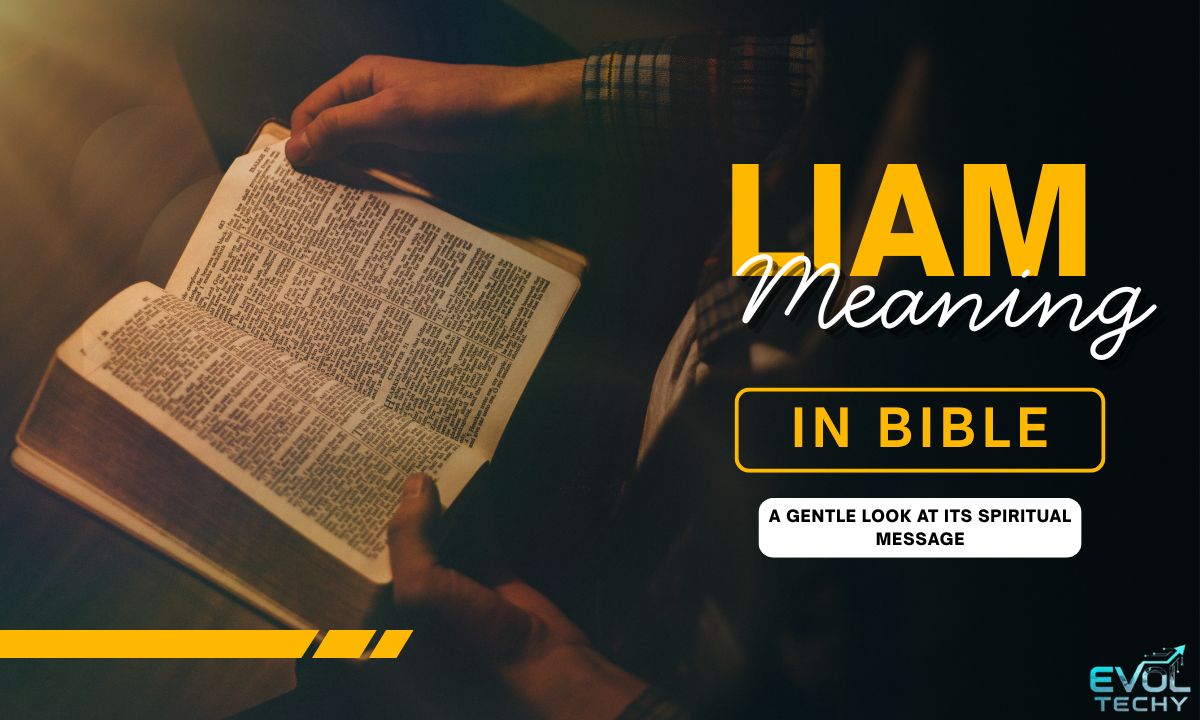
Liam Meaning in Bible: A Gentle Look at Its Spiritual Message
Have you ever heard the name Liam and felt something stir inside you, maybe during prayer, maybe in a quiet thought you couldn’t quite explain? Names carry weight. They carry stories. And in the world of faith, a name often feels like more than a sound. It feels like a message.
If you are searching for the Liam meaning in the Bible, you are not alone. Many parents, believers, and curious hearts want to know whether this popular name holds any biblical roots or spiritual symbolism. While Liam does not appear word for word in Scripture, its meaning is tied to themes that run through the entire Bible: strength, protection, courage, and faith.
This article walks through the biblical meaning of Liam in a calm, simple way. No confusing theology. No stretched claims. Just an honest look at what this name represents and how it connects to timeless biblical truths.
Names have always mattered in the story of faith. A name often revealed something about a person’s character, calling, or future. So it makes sense that people pause when a name like Liam catches their attention, whether through a newborn baby or a quiet thought during prayer.
Biblical Meaning of Liam
Liam is a name with Irish roots, though its real story starts further back in old Germanic language. It is a short form of William, which comes from “Willahelm,” a name built from two parts: “wil,” meaning will or desire, and “helm,” meaning helmet or protection.
Put together, the name means something close to “resolute protector” or “strong-willed guardian.” That single idea, protection through inner strength, is what connects Liam to so many biblical themes.
The table below breaks down the name’s roots in simple terms.
| Element | Origin | Meaning |
|---|---|---|
| Liam | Irish | Short form of William |
| William | Germanic (Willahelm) | Combination of “will” and “helmet” |
| Wil | Old Germanic | Desire, determination, will |
| Helm | Old Germanic | Helmet, covering, protection |
When this meaning is placed next to Scripture, four key spiritual ideas tend to surface. Let’s look at each one.
1. Strength in the Lord
The Bible speaks often about strength, but rarely the kind we think of first. It is not about muscle or might. It is about standing firm when everything around you feels shaky.
Ephesians 6:10 puts it plainly: “Be strong in the Lord and in his mighty power.” This verse captures something important about the Liam meaning in the Bible. True strength does not come from self-confidence. It comes from leaning on God.
This idea shows up again in Philippians 4:13, where Paul writes that he can do all things through Christ, who gives him strength. That is not boastful talk. It is a humble admission that human strength runs out, but God’s strength does not.
For someone connected to the name Liam, this can serve as a gentle reminder: real strength is never self-made. It is borrowed from a source much bigger than us.
This is also reflected in how the Bible treats weakness as an open door for grace rather than something to hide. In 2 Corinthians 12:9, Paul shares that God’s grace was sufficient for him, and that God’s power is made perfect in weakness.
2. Protector and Defender
The “helm” part of Liam’s root points directly to protection, and the Bible is full of imagery built around this same idea. God is repeatedly described as a shield, a fortress, and a refuge for His people.
Psalm 91:1 says that whoever rests in the shelter of the Most High will live in the shadow of the Almighty. That single verse paints a picture of safety that does not depend on circumstances but on closeness to God.
This protective theme also shows up in human form throughout Scripture:
- David protected his flock from wild animals long before he ever faced Goliath
- Joshua led the Israelites into the Promised Land without backing down
- Michael the archangel is described as a defender against spiritual darkness
Each of these figures reflects a protector whose strength flows from trust, not pride. That distinction matters. Biblical protection is never about control. It is about sacrifice and care for others.
This protective quality is not limited to dramatic moments. Much of biblical protection happens quietly, through prayer for a family member or a friend who simply shows up during a hard week.
3. A Spiritual Warrior
There is also a warrior thread woven into the Liam meaning in the Bible, but it is easy to misunderstand. This is not about violence or conflict with people. It is about a different kind of battle altogether.
Ephesians 6:12 makes this clear by saying our struggle is not against flesh and blood, but against spiritual forces working in unseen ways. The Bible calls believers to put on spiritual armor, including the helmet of salvation mentioned in Ephesians 6:17, which ties directly back to the “helm” root in Liam’s name.
A spiritual warrior, in the biblical sense, does three things consistently:
- Guards their thoughts and beliefs from fear and doubt
- Holds onto hope and faith even through hard seasons
- Leads others with humility rather than domination
This kind of courage rarely looks dramatic. It looks like quiet endurance. It looks like getting back up after a hard day and choosing faith anyway.
Romans 5:3-5 captures this well, explaining that trials produce perseverance, perseverance produces character, and character produces hope. The spiritual warrior idea is not about winning every battle. It is about staying faithful through the process.
4. Positive and Warning Meanings
Most names with strong roots carry both a blessing and a caution, and Liam is no exception. The positive meaning is clear: strength, courage, and protection rooted in faith.
But Scripture also offers a gentle warning. Proverbs 16:18 reminds us that pride comes before a fall. Strength without humility can quietly turn into self-reliance or arrogance.
So while the Liam meaning in the Bible carries a beautiful promise of resolve and guardianship, it also carries an invitation to stay humble. True strength always points back to God, never to self.
Biblical Virtues Reflected in the Name Liam
Even though Liam is not written directly into Scripture, its meaning lines up with virtues the Bible praises again and again. These are not vague associations. They are consistent, recurring patterns found throughout both the Old and New Testaments.
Biblical Virtues Reflected in Liam
Here is a simple breakdown of how Liam’s core meaning connects to specific biblical virtues.
| Virtue | Biblical Connection | Example Figure |
|---|---|---|
| Strength in faith | Joshua 1:9, Ephesians 6:10 | Joshua |
| Protective leadership | Psalm 91:1-2 | David |
| Servant leadership | Proverbs 27:23 | Moses |
| Courage under pressure | 2 Corinthians 12:9 | Paul |
| Humility in strength | Proverbs 16:18 | Gideon |
A few patterns are worth highlighting on their own.
Strength rooted in trust, not pride. Liam’s link to a “protector” mirrors figures like Joshua, who was told directly to be strong and courageous because God would go with him wherever he went.
Leadership through service, not power. Many biblical leaders were not chosen for their authority. They were chosen for their willingness to obey and guide others gently. This mirrors how Moses and David led, not through force, but through responsibility and care.
Faith that holds steady under pressure. Paul’s life is a clear example of perseverance, facing hardship after hardship while still choosing faith. This endurance theme fits naturally with the resolve built into Liam’s meaning.
Together, these virtues paint a picture of someone who leads quietly, protects sincerely, and stays anchored in faith rather than self-importance.
Liam in the Bible
A fair question often comes up here: is Liam actually in the Bible? The short answer is no, not directly. The name as we know it today did not exist in the Hebrew, Aramaic, or Greek texts that make up Scripture.
However, there is a name worth knowing about: Eliam. This name appears in 2 Samuel 23:34 and again in 1 Chronicles 3:5. Eliam was the father of Bathsheba and one of King David’s mighty warriors, a group of elite, loyal fighters.
The meaning of Eliam is often translated as “God is my people” or “my God is among the people.” While it is not the direct ancestor of Liam in a linguistic sense, many believers find the phonetic and thematic closeness meaningful. Both names carry a sense of belonging to God and standing as a protector within a larger family or community.
It is also worth remembering that many beloved Christian names, such as Grace, Faith, or Hope, are not found word for word in the Bible either. Their value comes from what they represent, not from appearing in a verse. Liam fits this same pattern. Its strength comes from meaning, not literal placement in Scripture.
This distinction often brings relief to parents and believers searching for a deeper connection. A name does not need a chapter and verse to carry spiritual weight. What matters more is whether its values line up with what the Bible teaches.
Spiritual Significance and Symbolism
Names in the Bible were never just labels. They often marked a turning point, a calling, or a change in identity. Abram became Abraham. Jacob became Israel. Each name shift reflected something deeper happening in that person’s life and relationship with God.
This pattern matters when thinking about the Liam meaning in the Bible. Even though the name itself is modern, its symbolism echoes something ancient: the idea that a name can point toward a purpose.
The “helmet” symbolism tied to Liam connects to one of the most vivid pictures in all of Paul’s writing. In Ephesians 6:17, believers are told to take up the helmet of salvation as part of the full armor of God. A helmet, in ancient warfare, protected the most vital part of a soldier: the head, the seat of thought and decision-making.
This image gives Liam a layered symbolism:
- A covering over the mind, protecting against fear, doubt, and confusion
- A sign of readiness, much like a soldier prepared for what comes next
- A quiet reminder that real protection starts with how we think, not just how we act
For someone drawn to this name, whether through a child’s name, a dream, or a personal reflection, the symbolism offers something steady to hold onto: the assurance that strength and protection are always available through faith, not through self-reliance alone.
It also helps to remember that biblical symbolism rarely demands grand action. A helmet is worn quietly, doing its work without drawing attention to itself. In the same way, the symbolism behind Liam suggests a steady, unseen kind of faithfulness.
Biblical Interpretations in Dreams or Real Life
Some people come across the name Liam in unexpected ways, through a dream, a passing thought during prayer, or a name that simply will not leave their mind. When this happens, it is natural to wonder if it means something.
While the Bible does not give a specific verse about dreaming of names, Scripture does treat dreams and impressions as meaningful in certain seasons of life. Joseph’s dreams in Genesis and Daniel’s visions are well-known examples of God using dreams to communicate direction or insight.
If the name Liam has appeared in your life in a way that feels significant, here are a few gentle ways believers often interpret it:
- A call to strength. It may be a quiet nudge to lean into faith during a hard season rather than relying on personal effort alone.
- A call to protect. It might point toward guarding your family, your beliefs, or your peace of mind through prayer and intention.
- A call to humility. It can serve as a check against pride, a reminder to stay grounded in trust rather than self-sufficiency.
It is worth saying clearly: this is reflection, not prophecy. The Bible does not promise that every name carries a hidden message. But meaning can still be personal, even when it is not formally written into Scripture.
What matters most in moments like these is not finding a definitive answer, but staying open to what God might be doing in a season of life. Approaching it with patience rather than pressure tends to bring more peace than forcing an explanation.
Practical Lessons & Faith Insights
Understanding a name’s meaning is only useful if it leads somewhere. Here are practical ways the Liam meaning in the Bible can be lived out, whether by someone who carries the name or someone simply drawn to its message.
Start each day with a small moment of prayer. A simple request for strength and guidance sets a steady tone before challenges arrive.
Practice protecting others in small ways. This does not require grand gestures. Checking in on a struggling friend or standing up for someone quietly counts.
Guard your thoughts intentionally. Since the “helmet” symbolism points to mental protection, this might mean limiting negative input and feeding your mind with encouraging truth instead.
Lead by example, not by control. True leadership, as shown by Moses and David, comes from service rather than authority.
Stay humble in strength. Whenever you notice progress or growth, pause and acknowledge where that strength actually came from.
These small, repeatable habits turn a name’s meaning into something lived, not just something looked up once and forgotten.
Faith, in this sense, is less about a single defining moment and more about a long pattern of small, faithful choices. The Liam meaning in the Bible invites exactly that kind of steady living: strength practiced daily, protection offered quietly, and humility kept close at hand.
You can also checkout this article as well 35+ Beautiful Aesthetic Bible Verse Laptop Wallpaper
Conclusion
The name Liam may not appear directly in Scripture, but its meaning, strength, protection, and quiet courage, echoes through many of the Bible’s most familiar stories and verses.
Whether you carry this name, gave it to your child, or simply felt drawn to its message, it offers a steady reminder. True strength is borrowed from God, and true protection always begins with humility and faith.